
![Best Apps to Track Calories for Muscle Gain in 2025 [Full Guide]](/comparestrong.webp)
2025-08-26
Best Apps to Track Calories for Muscle Gain in 2025 [Full Guide]
Most people think muscle gain comes only from lifting heavier weights—but after 15 years in the gym, I learned the hard way that training alone isn’t enough
Read Article
Personal trainer & software developer · 2025-04-10

You can have the perfect workout program, optimal nutrition, and 8 hours of sleep every night. But if you are not applying progressive overload, you will not get stronger or build more muscle. Period.
Progressive overload is the single most validated principle in exercise science. It is also the one that most gym-goers either do not understand or do not apply consistently. This guide explains exactly what it is, why it works, and the practical methods to implement it.
Progressive overload means gradually increasing the stress placed on your muscles over time — more weight, more reps, more sets, or less rest — so your body keeps having a reason to adapt. Without it, training stalls no matter how good the program or nutrition is; it's the mechanism behind every effective strength program, whether or not the term is used explicitly.
Progressive overload is the gradual increase of stress placed on the body during training over time. When you expose your muscles to a greater challenge than they have previously adapted to, they respond by getting stronger and larger. When you stop increasing the challenge, adaptation stops.
It is the fundamental mechanism behind all strength and muscle gains. Every effective training program — from Starting Strength to PHUL to 5/3/1 — is built around a progressive overload structure, even if that term is not explicitly used.
Your body is extraordinarily efficient at adapting. Give it the same stimulus repeatedly and it will find the most economical way to produce that output — which means it will stop changing once it has adapted.
The person who does 3 sets of 10 push-ups every Monday for two years will not have significantly more upper body strength after year two than after month one. Their body adapted to that stimulus and has no reason to continue improving.
The person who starts with 3x10 push-ups, then progresses to 3x15, then weighted push-ups, then dips, then weighted dips will continuously build strength because the stimulus keeps increasing.
The most straightforward method. When you can complete all target reps with good form, add weight. The standard increments: 2.5–5 lbs for upper body, 5–10 lbs for lower body. This is called linear progression and works extremely well for beginners and intermediates.
If you are in a rep range (e.g., 8–12 reps), progress from the bottom to the top of the range before adding weight. Example: if you bench 135 lbs for 8 reps, work up to 12 reps with 135, then add weight and drop back to 8 reps.
Adding a set adds volume, which is a form of increased stress. Going from 3 sets to 4 sets of an exercise increases the total training volume by 33%. This method is especially useful for hypertrophy when you have already maximized weight and rep progression.
Performing the same workout with shorter rest periods is a meaningful increase in training density — more work in less time. Reduce rest periods by 15–30 seconds as your conditioning improves.
Progressing from easier to harder exercise variations is progressive overload. Push-up → Decline push-up → Archer push-up. Bodyweight squat → Goblet squat → Barbell back squat. This method is particularly useful for bodyweight training.
Training a muscle group more times per week (going from 2x to 3x per week) increases overall volume and provides more frequent training stimuli. This is an advanced method best used after other progression methods have been exhausted.
This depends entirely on your training age:
If you are not progressing at all after 3–4 weeks, something is limiting you: insufficient recovery, inadequate nutrition, poor program design, or lack of effort at the end of sets.
The minimum viable tracking system: write down the date, exercise, weight, sets, and reps after each session. Before your next session, look up what you did last time and aim to do slightly more.
PonteFuerteAI does this automatically — it logs your sets and reps, shows your last session's performance before each exercise, and flags when you hit personal records. The manual version works; the automated version removes friction and makes consistent progression more likely.
Yes. Adding distance, speed, or elevation to running, cycling, or swimming follows the same principle. Most cardio improvements plateau when people do the same workout indefinitely.
Absolutely. The key is using exercise progressions (harder variations) rather than adding external weight. A push-up progression from regular to decline to archer to one-arm push-ups is progressive overload.
You maintain your current level for a period, then gradually lose strength and muscle if training stops completely. Strength is use-dependent — the stimulus maintains the adaptation.
PonteFuerteAI tracks your weights and reps every session, automatically calculates when to increase weight based on your performance, and builds deload weeks into your program. You focus on the reps; the app manages the progression logic.
Written by
Alberto MenéndezPersonal trainer · Software developer · Founder of PonteFuerteAI
Over 10 years of training experience across three continents. Certified personal trainer who coached clients in Spain, India, and Japan before building PonteFuerteAI — the all-in-one AI fitness app he always wished existed.
Read full story →Download PonteFuerte AI today and join thousands who are already achieving their goals with the help of our artificial intelligence.
 ▶Google PlayFree Personal Plan
Most people think muscle gain comes only from lifting heavier weights—but after 15 years in the gym, I learned the hard way that training alone isn’t enough
Read Article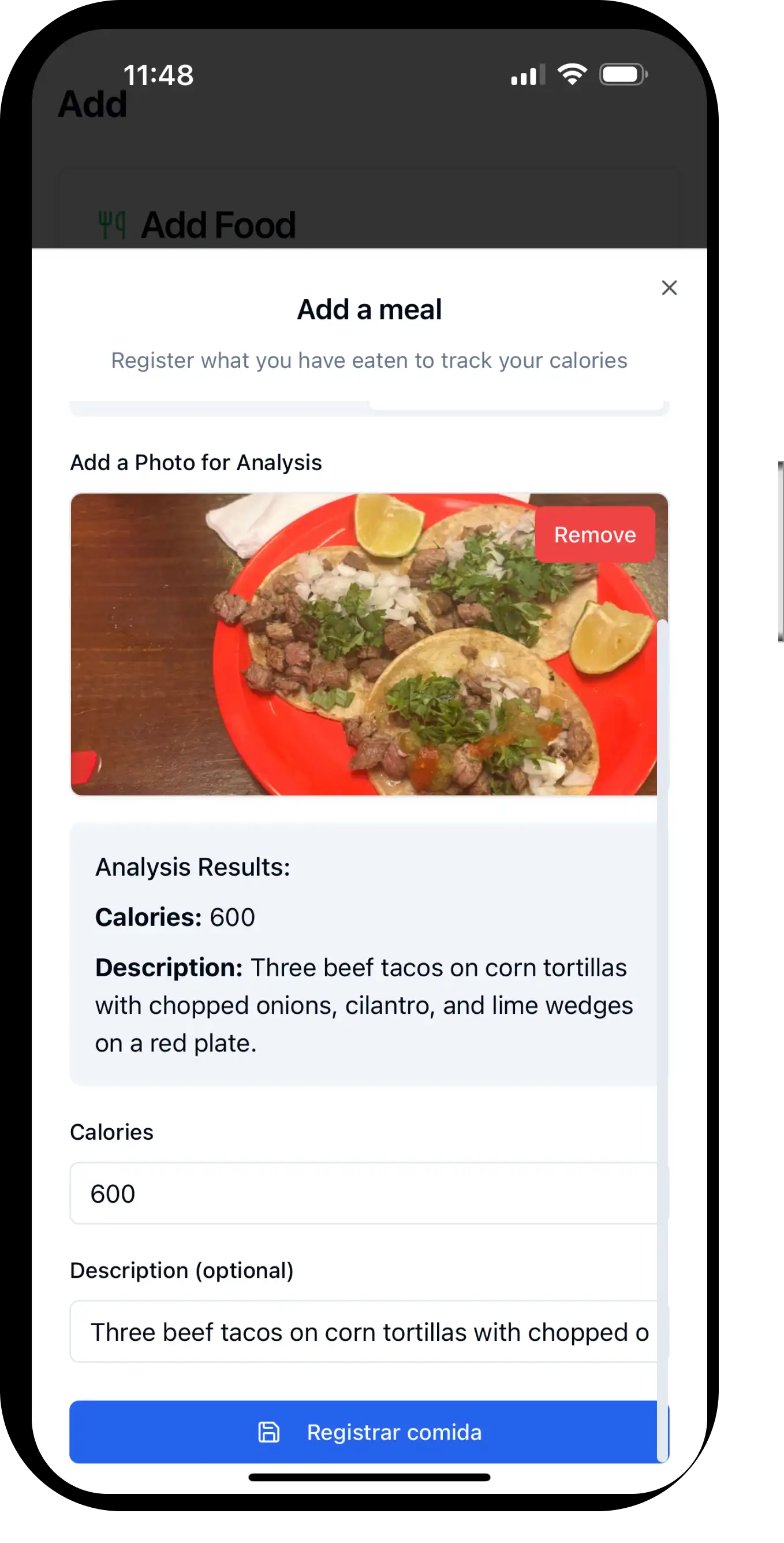
A complete beginner's guide to meal prep for weight loss: how many meals to prep, a sample template with real portions, storage times, and the mistakes that quietly stall fat loss.
Read Article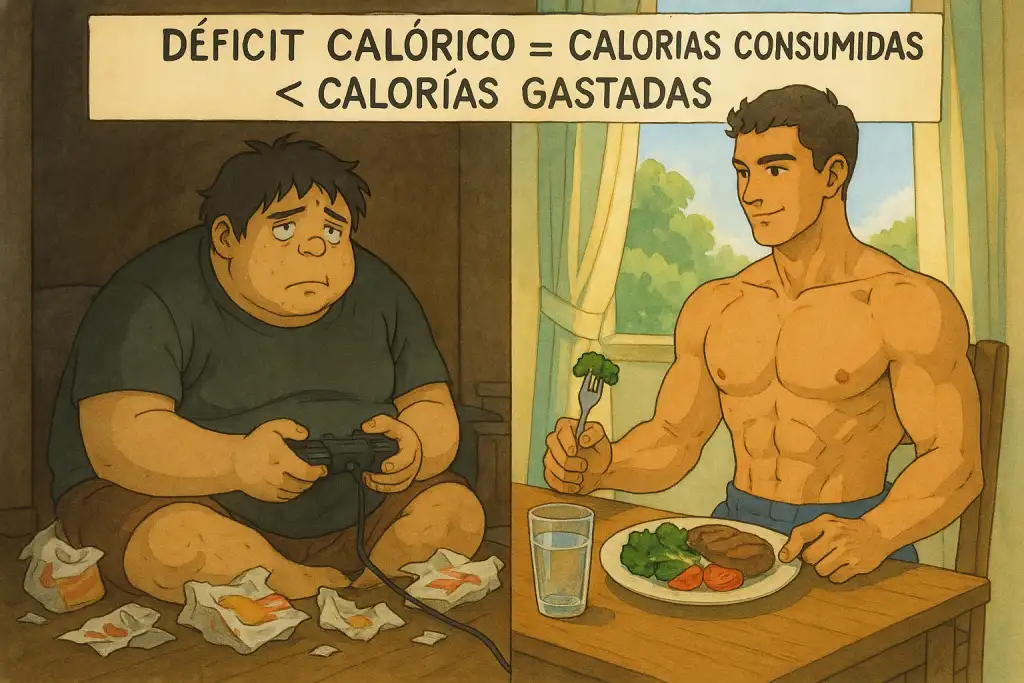
How long does it take to lose 20 pounds? What should you eat? How much should you exercise? A realistic, science-backed plan that actually works — without extreme diets.
Read Article