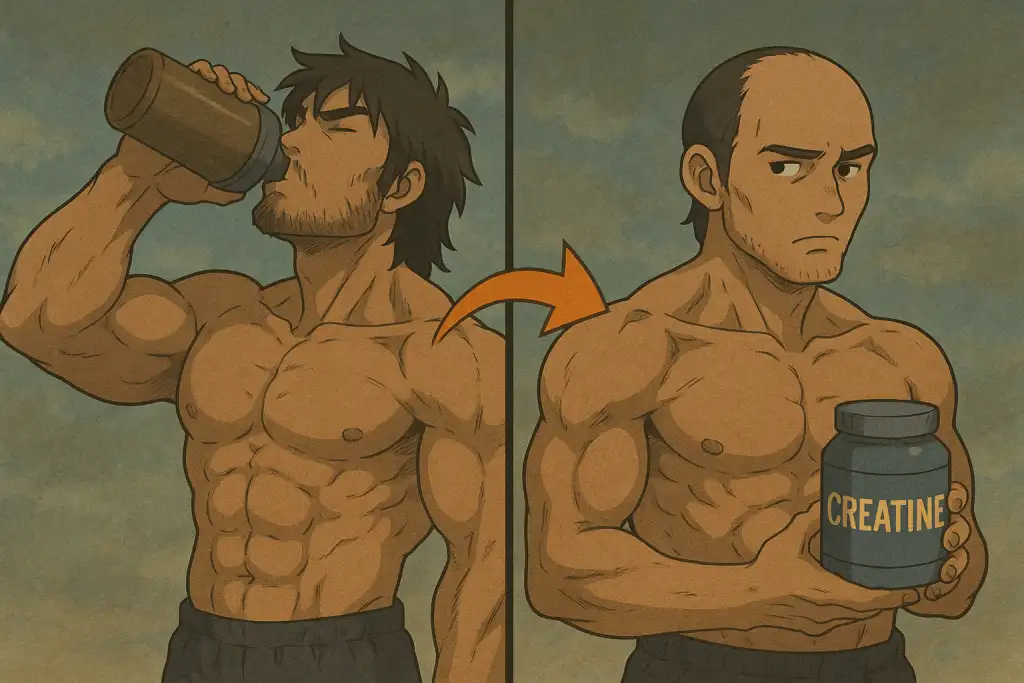
Are you a fitness enthusiast looking to enhance your workout performance and muscle gains? Creatine is a popular supplement among athletes and bodybuilders, but is it worth it? This article will explore the benefits, side effects, and overall worth of taking creatine, addressing common concerns like hair loss from creatine. By the end, you'll have a clear understanding of whether creatine is right for you.
Quick answer
No strong evidence directly links creatine to hair loss. The concern traces back to one small 2009 study showing a rise in DHT, a hormone tied to pattern baldness in people who are already genetically predisposed — it did not measure actual hair loss. At standard doses (3-5g/day), creatine monohydrate remains one of the most researched and safest supplements for strength and muscle gains.
What is Creatine?
Creatine is a natural substance found in our bodies, primarily in the skeletal muscles. It's also present in small amounts in red meat and fish. When taken as a supplement, creatine monohydrate is the most common form. It helps increase muscle performance, particularly during short, intense exercises like weightlifting.
How Does Creatine Work?
Creatine works by increasing the levels of adenosine triphosphate (ATP) in your muscles. ATP is the primary energy source for muscle contractions. By enhancing ATP availability, creatine enables you to perform more repetitions in your workouts, leading to increased muscle strength and size.
Creatine Advantages and Benefits
Enhanced Strength and Muscle Gains
One of the primary benefits of creatine is its ability to enhance strength and muscle mass. Studies have shown that creatine can increase one-rep max strength by up to 15% and improve muscle mass by up to 20%. This makes it an excellent choice for individuals looking to build muscle and improve their strength.
Improved Endurance
Creatine can also improve endurance during high-intensity activities. By increasing ATP availability, it allows you to maintain a higher intensity level for a longer period, which can be beneficial for athletes and fitness enthusiasts.
Increased Workout Recovery
Creatine has been shown to improve muscle recovery after intense workouts. This can help reduce muscle soreness and fatigue, allowing you to train more frequently and consistently.
Pros of Taking Creatine
Easy to Use
Creatine is easy to use and can be found in various forms, including powder, capsules, and gummies. It's typically taken with water or a sports drink before or after workouts.
Broad Applicability
Creatine is not just for bodybuilders; it can benefit anyone looking to improve their strength and endurance. It's particularly useful for athletes in sports that require short bursts of intense activity.
Cost-Effective
Compared to other supplements, creatine is relatively inexpensive. A single scoop can last for several weeks, making it a cost-effective option for those looking to enhance their workout performance.
The Myth Debunked: Does Creatine Actually Cause Hair Loss?
Let's address the number one concern that echoes across every fitness forum: Does creatine cause hair loss?
The short answer, based on the overwhelming body of scientific evidence, is no. But to understand why this myth is so persistent, we need to look at its origin.
The Origin: A Single Study from 2009
The entire speculation about creatine and hair loss stems from one single study conducted in 2009 on a small group of college-aged rugby players. This study found that after a creatine loading phase, the players' levels of a hormone called Dihydrotestosterone (DHT) increased.
Since DHT is known to be a factor in male pattern baldness for genetically predisposed individuals, this finding took off and created a myth that has lasted for over a decade.
What a Deeper Look at the Science Reveals
However, when you dig deeper, the story falls apart. An extensive 2021 scientific review published in the Journal of the International Society of Sports Nutrition analyzed all the available evidence, including that original 2009 study, and their conclusions are clear:
- The Original Study Has Never Been Replicated: In science, for a finding to be considered reliable, it must be replicated by other independent studies. The results of that 2009 study have never been replicated in the years since.
- Testosterone Levels Didn't Change: In the original study, the subjects' total testosterone (the hormone from which DHT is made) did not increase. In fact, out of 12 subsequent studies investigating this, ten found no change in testosterone levels at all.
- DHT Levels Remained Within Normal Limits: Even with the slight increase noted in the 2009 study, the subjects' DHT levels remained well within normal clinical limits. They were not at a level considered problematic.
- No Studies Have Reported Hair Loss: This is the most critical point. In the hundreds of studies conducted on creatine supplementation, not a single one has reported hair loss as a direct side effect.
| Common Claim |
Scientific Evidence |
| "Creatine causes hair loss." |
False. No study has ever directly linked creatine supplementation to hair loss. |
| "Creatine increases DHT, which causes baldness." |
Misleading. A single, non-replicated study showed a minor increase in DHT within normal levels. |
| "I took creatine and my hair started thinning." |
Correlation, not causation. Intense resistance training itself can affect hormone levels. |
The Verdict
In their own words, from their 2021 review:
"In summary, the current body of evidence does not indicate that creatine supplementation increases total testosterone, free testosterone, DHT or causes hair loss/baldness."
Creatine Side Effects
Now that we've addressed the hair loss myth, let's look at the actual side effects that have been documented:
Hair Loss
As we've established above, there is no scientific evidence linking creatine to hair loss. If you experience hair thinning while taking creatine, it's likely due to other factors such as genetics, stress, intense training, or hormonal changes unrelated to creatine supplementation.
Dehydration
Another potential side effect is dehydration. Creatine can increase water retention in muscles, which can lead to a sensation of fullness or bloating. To avoid dehydration, it's important to stay well-hydrated by drinking plenty of water.
Digestive Issues
Some individuals may experience digestive issues such as bloating, stomach cramps, or diarrhea. These creatine side effects are usually mild and resolve on their own once the body adjusts to the supplement.
Muscle Cramps
Creatine can also cause muscle cramps or stiffness, especially for beginners. To minimize these, it's recommended to take creatine with water and gradually increase the dosage over time.
How to Take Creatine Safely
Proper Dosage
The recommended creatine dosage for creatine monohydrate is typically 5 grams per day. This can be taken in divided doses, such as 2.5 grams before and after workouts, or all at once.
Hydration
Make sure to drink plenty of water when taking creatine to avoid dehydration. Aim for at least 2-3 liters of water per day.
Gradual Introduction
If you're new to creatine, start with a loading phase to help your muscles retain the supplement. This involves taking 20 grams per day for 5-7 days, followed by a maintenance phase of 5 grams per day.
Case Studies and Real-Life Examples
Athlete Testimonial
John, a professional rugby player, started taking creatine to improve his performance. He noticed a significant increase in his strength and endurance, allowing him to play at a higher level. He also reported fewer muscle cramps and quicker recovery between games.
Bodybuilder Experience
Sarah, a bodybuilder, used creatine to enhance her muscle gains. She saw a noticeable increase in her muscle mass and strength over the course of 3 months. She also appreciated the reduced muscle soreness and quicker recovery times.
Conclusion
Taking creatine can be a worthwhile investment for anyone looking to improve their strength, endurance, and muscle mass. While there are some potential side effects, they are usually mild and manageable. If you're concerned about hair loss, it's important to remember that this is not a common side effect and is more likely related to the stress of intense workouts.
To maximize the benefits of creatine and minimize any potential side effects, follow the proper dosage guidelines, stay well-hydrated, and introduce it gradually to your routine. If you have any concerns, it's always a good idea to consult with a healthcare professional.
By taking these steps, you can take full advantage of creatine's benefits and achieve your fitness goals with confidence.
Reference:
Antonio, J., Candow, D.G., Forbes, S.C. et al. Common questions and misconceptions about creatine supplementation: what does the scientific evidence really show?. J Int Soc Sports Nutr 18, 13 (2021). https://doi.org/10.1186/s12970-021-00412-w
Disclaimer:
This content is for informational purposes only and should not replace professional medical advice. Please consult with a healthcare professional before beginning any new supplement regimen.